



High Definition Liposuction Turkey
High definition liposuction is a popular procedure in Turkey. It uses liposuction to take away extra fat and brings out muscle shape for a more toned look. A skilled surgeon carefully removes fat and shapes the muscles. This gives a defined, fit look. This procedure can target many areas like the stomach, hips, thighs, arms, and back.
How much high definition liposuction cost in Turkey
High definition liposuction Turkey cost start from 3500 euro. High definition liposuction costs in Turkey can vary. It depends on how big the treatment area is, how much fat to remove, and the surgeon’s experience.
All-Inclusive HD Lipo Package in Turkey
| Service/Item | Included? | Details/Notes |
|---|---|---|
| Surgeon and Anesthesiologist Fees | Yes | All surgical team fees |
| JCI-Accredited Hospital Fees | Yes | 1-night hospital stay included |
| Pre-operative Blood Tests | Yes | All required standard tests |
| Post-operative Medications | Yes | Painkillers, antibiotics |
| Compression Garments | Yes | 2 garments (one for washing) |
| Hotel Accommodation | Yes | 7 nights hotel |
| All VIP Transfers | Yes | Between Airport-Hotel-Clinic |
| Private Patient Coordinator/Translator | Yes | Throughout the entire process |
| Follow-up Consultations | Yes | Before discharge and online |
Operation Report Card.
| Question | Answer |
|---|---|
| What is HD Lipo? | Fat removal, enhances muscle. |
| Who is a good fit? | Healthy, near ideal weight. |
| How long is the procedure? | Several hours. |
| What is recovery like? | Compression garments, rest. |
| When are results visible? | Several months. |
| What are the risks? | Infection, bleeding, numbness. |
| Are results permanent? | With healthy lifestyle. |
| Is a consultation needed? | Yes, with a qualified surgeon. |
Whats is hd lipo?
HD lipo, or high definition liposuction, is a special way to shape the body. It removes extra fat from certain areas and highlights your muscles. This gives you a sculpted, toned look. The process uses special techniques to take out fat and shape your muscles. The surgeon makes small cuts to reach the area and uses a tube to suck out fat.
HD lipo can shape many areas like your belly, hips, thighs, arms, and back. It’s popular with people who want a toned, sporty look. HD lipo needs a skilled surgeon who knows the special techniques. Patients need to understand that HD lipo is not for losing weight. It’s for enhancing muscle tone and shape in certain areas.
Benefits of HD liposuction
HD lipo, or high definition liposuction, has many benefits. Here are the key ones:
- Better body shape: HD lipo can take out stubborn fat and enhance muscle shape. This gives you a more sculpted look.
- Less invasive: HD lipo is less invasive. It needs only small cuts, which means less scarring and faster recovery.
- Versatile: HD lipo can shape many areas, like the belly, hips, thighs, arms, and back. It’s a versatile option for those wanting a more toned look.
- Safe and effective: HD lipo is safe and works well when done by an experienced surgeon. It has a low risk of complications and can give long-lasting results.
- Confidence boost: HD lipo can boost your self-confidence by making you look better and more toned.
In all, HD lipo is a great way to get a more toned body. It has many benefits for those seeking a safe, less invasive way to shape their body.
Is high definition liposuction better than traditional liposuction?
High-definition liposuction offers more detailed sculpting and definition compared to traditional liposuction, which primarily removes fat. High-definition liposuction is better for those seeking a sculpted, athletic appearance, while traditional liposuction is suitable for general fat reduction. The choice depends on individual goals and body types.
Things to consider before High Definition Liposuction
If you’re thinking about high definition liposuction (HD lipo), consider these points:
- Who can get it: HD lipo isn’t for everyone. You should be close to your ideal weight, healthy, and have realistic hopes. You should also want to target certain areas for better shape.
- Who should do it: HD lipo needs a skilled and experienced surgeon. Pick a board-certified plastic surgeon who has done HD lipo before and can show you their past work.
- The process: HD lipo is less invasive and only needs small cuts. But it has some risks like infection, bleeding, and uneven results. Talk about the risks and benefits with your surgeon.
- Healing: HD lipo has a shorter healing time than more invasive surgeries, but you’ll still need to take time off and rest. Follow your surgeon’s healing advice.
- Cost: HD lipo can cost more than regular liposuction. Discuss costs with your surgeon and understand what you’re paying for.
By thinking about these points, you can decide if HD lipo is right for you and get the best results.
RELATED: Vaser Liposuction Turkey
Am I suitable for HD lipo?
To see if you’re right for high definition liposuction (HD lipo), meet with a qualified surgeon. But in general, good candidates for HD lipo:
- Are close to ideal weight: HD lipo is not for weight loss. It works best for those near their weight goals but want more body shape and tone.
- Have good skin stretch: To get the best results, you need good skin elasticity. If your skin is loose or saggy, another procedure might be better.
- Are healthy: HD lipo is a surgery and needs good overall health to lower risk. If you have a long-term health issue, you might not be a good fit.
- Have real hopes: HD lipo can tone certain body areas, but you should have real hopes for the results.
- Stay healthy: HD lipo can remove stubborn fat and boost muscle tone, but it’s not a replacement for a healthy lifestyle. To keep the results, stay active and eat well.
If you’re thinking about HD lipo, meet with a skilled surgeon who can see if you’re a good candidate and if it’s the right surgery for you.
Benefits of power-assisted liposuction for high definition lipo
Power-assisted liposuction (PAL) is a modern lipo method. It’s great for high definition liposuction (HD lipo) because it:
- Removes fat accurately: PAL uses a device that shakes to break up fat cells. This helps remove fat evenly. This is key for the best shape and definition in the treated area.
- Reduces swelling: PAL is a softer method that reduces tissue damage. This means less swelling and bruising. The recovery is quicker and more comfortable than with regular lipo.
- Boosts muscle definition: A skilled doctor can use PAL to remove fat from specific areas. This makes muscles more defined for a toned look. This is really good for patients wanting HD lipo.
- Improves skin tightening: PAL also improves skin tightening in the treated areas. This is important for the best shape and definition. It’s especially good for patients with loose skin or poor skin stretch.
In general, PAL is an effective, safe way to get the best results with HD lipo. By using PAL, a skilled doctor can help patients get the body shape they want, boosting their confidence.
What does HD liposuction involve?
High definition liposuction, or HD lipo, is a procedure that trims fat and shapes muscles. This gives a fit, sculpted look. Here’s how it works:
- Anesthesia: HD lipo is usually done with local anesthesia. In some cases, general anesthesia is used.
- Incisions: Small cuts are made in the treatment area.
- Liposuction: The doctor uses special liposuction to remove fat. They also shape the muscles to enhance definition.
- Fat grafting (optional): Sometimes, fat is added to other parts of the body, like the buttocks or breasts, to enhance the shape.
- Closure: The cuts are stitched, and a tight garment is worn to reduce swelling and help healing.
After the treatment, patients may have bruising and discomfort. This goes away in a few weeks. Patients should rest and wear a compression garment for the best healing.
HD lipo is a safe way to get a defined, toned look. It’s crucial to pick a skilled doctor for the best results.
HD lipo recovery
Recovering from high definition liposuction, or HD lipo, is vital for the best results. Here’s a basic guide:
- Wear tight garments: After HD lipo, your doctor will give you tight garments. These reduce swelling and aid healing. Make sure to wear them as directed.
- Take a work break: Most patients need to take a few days to a week off from work to rest and heal.
- Avoid heavy exercise: Rest from heavy exercise for several weeks after the procedure. Light walks are good, but avoid high-impact exercises and heavy lifting.
- Handle pain: Pain or discomfort after HD lipo is normal. Use pain medication given by your doctor.
- Follow instructions: Your doctor will give you instructions for after the procedure. These may include avoiding certain foods or medications, proper wound care, and going to follow-up appointments.
Recovery from HD lipo varies by person. By following your doctor’s instructions and taking care of yourself, you can achieve the best results.
RELATED: Lipo 360 Turkey
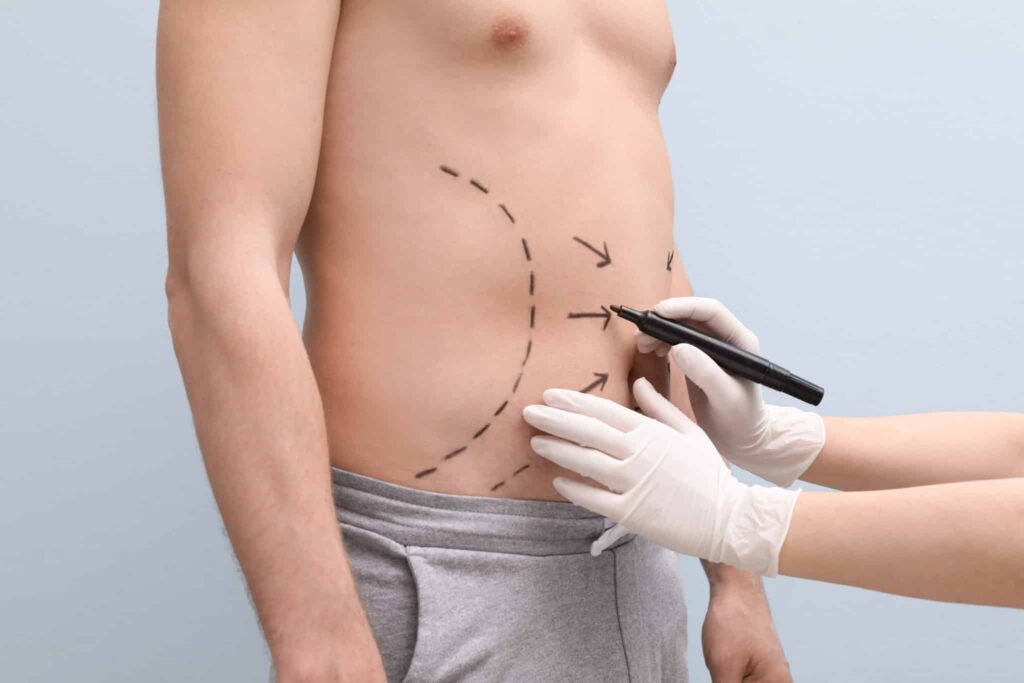
Preoperative marking for HD lipo
Preoperative marking is a key step in high definition liposuction (HD lipo). It helps the surgeon plan the surgery for the best results.
In this step, the surgeon uses a marker to draw on the patient’s skin. They mark areas where fat will be removed or muscle will be highlighted. They might also mark spots for fat grafting.
The surgeon and patient work together during preoperative marking. The surgeon considers the patient’s goals, body shape, and skin quality. They draw the marks while the patient is standing. This allows the surgeon to see the body’s natural shape and plan the surgery.
Careful marking helps customize the surgery for each patient. It helps results look natural and balanced. That’s why it’s key to choose a surgeon who knows body anatomy well and can guide you to the best results.
Skin retraction after HD lipo
Skin retraction matters a lot in high definition liposuction (HD lipo). This process makes the skin tight after fat removal and helps shape the body.
Several factors affect skin retraction. These include a person’s age, skin quality, and the amount of fat removed. Young people with good skin elasticity usually have better skin retraction. On the other hand, older people with loose skin might not see as much retraction.
To improve skin retraction, patients should follow their surgeon’s advice. They should wear compression garments and avoid smoking and sun. A healthy lifestyle with exercise and a balanced diet is also important.
If skin retraction is an issue, the surgeon might suggest other treatments. These could include skin tightening procedures or fat grafting.
In conclusion, skin retraction is important in HD lipo. It’s crucial to choose an experienced surgeon who can guide you to the best results.
How to get the best HD lipo results
For the best results with high definition liposuction (HD lipo), keep these tips in mind:
- Find a good surgeon: Choose a board-certified plastic surgeon with HD lipo experience. Ask to see before and after photos of previous patients.
- Stay healthy: Regular exercise and a balanced diet help maintain HD lipo results.
- Follow surgeon’s instructions: Your surgeon will guide you on post-op care. Stick to these directions to heal well.
- Use compression garments: These garments help reduce swelling and improve skin tightness. They play a key role in getting the desired body shape.
- Be patient: HD lipo results take time. You may need to wait a few months to see the final outcome.
Following these tips and choosing an experienced surgeon will help you get the best from HD lipo and enjoy your new shape.
What are the potential risks of high definition liposuction?
High definition liposuction (HD lipo) has some risks, like any surgery:
- Infection: There is always a chance of infection with surgery. Antibiotics are usually given to lower this risk.
- Bleeding: Bleeding could occur during or after the operation. In some cases, further surgery may be needed.
- Swelling and bruising: These are common post-surgery and usually go away in a few weeks.
- Skin issues: HD lipo may cause uneven skin. Extra treatment could be needed to fix this.
- Numbness: Some patients might feel numb or tingly in the treated areas. This normally gets better on its own.
- Skin necrosis: This is when skin tissue dies. It’s rare, but if it happens, you’ll need more treatment.
- Anesthesia issues: Anesthesia can cause problems, like allergic reactions or breathing issues.
Choosing a skilled surgeon helps lower these risks. They can guide you on the risks and benefits of HD lipo and help you get the best results safely. High Definition Liposuction Turkey
HD Liposuction Recovery Timeline: A Week-by-Week Guide
| Timeframe | Expected Sensations | Activity Level | Key Aftercare Practices |
|---|---|---|---|
| Week 1 | Swelling, pain, bruising, leakage | Rest, only light walking | 24/7 compression garment, lymphatic massage (daily), pain management |
| Weeks 2-4 | Reduced swelling, fading bruises | Return to light activities and desk work | 24/7 compression garment, continue massages (tapered) |
| Months 2-3 | Contour emerges, reduced hardness/firmness | Begin light exercise (with approval) | Compression garment at night, regular massage |
| Months 4-12 | Final definition, tissues soften | Return to all normal activities and exercise | Weight management, healthy lifestyle |
High definition liposuction? FQAs
The perceived “gentleness” of VASER (Vibration Amplification of Sound Energy at Resonance) is a function of its tissue selectivity, which minimizes trauma to the surrounding neurovascular structures, skin, and connective tissue.
However, the primary strength and unique efficacy of VASER technology are realized precisely in these challenging, high-density areas. Regions such as the back and the male chest (in cases of gynecomastia) are characterized by dense, highly fibrotic (fibrous) adipose tissue. This fibrous stroma makes these areas highly resistant to penetration and effective removal by traditional suction-assisted liposuction (SAL) cannulas.
VASER utilizes high-frequency ultrasonic energy to overcome this challenge. The ultrasound selectively targets and imparts energy to the adipocytes, inducing cavitation. This process effectively emulsifies (liquefies) the dense fat, even within its tough fibrous network, transforming it into a smooth liquid. This emulsification allows for the fat to be aspirated with minimal effort and significantly reduced trauma to the surrounding architecture.
Therefore, for the specific goals of HI FI liposuction—which requires precise fat ablation to sculpt and reveal underlying muscle definition (e.g., paraspinal muscles or pectoral borders)—VASER is the ideal and necessary modality. It provides the power required to treat resistant fat while retaining the finesse needed for high-definition contouring.
Yes, VASER HD Lipo is an exceptional modality for revision liposuction and correcting iatrogenic contour irregularities from previous procedures.
Suboptimal results from traditional liposuction are often characterized by fibrotic, uneven fat deposits (adhesion) and contour deformities. Attempting to correct this with conventional cannulas is extremely difficult, as the scar tissue (fibrosis) is dense and resistant to mechanical trauma.
The ultrasonic energy emitted by VASER is uniquely suited for these revision cases. It has the ability to effectively break down and emulsify not only the residual, targeted adipose tissue but also the tough, fibrous scar tissue that is tethering the skin and causing the irregularities.
This process (fibrosis ablation and fat emulsification) allows a skilled HI FI surgeon to release the adhesions and precisely aspirate the problematic areas. The precision of VASER enables the surgeon to smooth out these deformities, strategically re-contour the area, and blend the transition zones, thereby significantly improving and refining the previous surgical outcome.
This differentiation is the core principle of HI FI (High Fidelity) liposculpture and relies entirely on the surgeon’s advanced training, tactile feedback, and profound understanding of musculoskeletal anatomy.
The process is both pre-operative and intra-operative:
- Pre-operative Anatomical Marking: This is the critical blueprint. The surgeon does not guess where the muscles are; they map the patient’s specific anatomy. This is done while the patient is standing and actively flexing their musculature (e.g., contracting the rectus abdominis, obliques, and serratus). The surgeon meticulously traces the patient’s actual muscle borders, insertions, and inscriptions. This map dictates precisely where fat must be thinned and where it must be preserved.
- Intra-operative Technique: The surgeon first addresses the deep fat layer (the bulk) to reduce volume. Then, to create definition, they move to the superficial fat layer, which lies just beneath the skin. Using specialized, fine VASER cannulas, the surgeon follows the pre-drawn map:
- Highlights (Muscle Bellies): They systematically thin the superficial fat layer over the peak of the muscles (e.g., the “blocks” of the rectus abdominis or the deltoid) to make the muscle “pop.”
- Shadows (Grooves): They strategically preserve a slightly thicker layer of this superficial fat in the “valleys” or sulci between the muscles (e.g., the linea alba or the transverse inscriptions of the abdomen).
This meticulous, differential sculpting of the superficial fat layer—thinning over the “hills” and preserving in the “grooves”—is what creates the natural-looking highlights and shadows that define the underlying musculature. It is an artistic application of anatomical knowledge.
Post-liposuction fibrosis is the development of excess scar tissue within the subcutaneous plane, manifesting as firm, lumpy, or hardened patches under the skin after a procedure. It is an inflammatory healing response where collections of fluid (edema) and healing tissues (fibrin) can become dense and organized, leading to a “cobblestone” or irregular texture.
Our specific HI FI aftercare protocol is aggressively designed to mitigate this. The most critical component of this protocol is mandatory, early, and frequent manual lymphatic drainage (MLD) massage.
This is the most effective method to prevent fibrosis. The specialized MLD technique manually manipulates the subcutaneous tissue to:
- Evacuate Fluid: It breaks up and resolves fluid collections (seromas and edema) before they have the chance to solidify and organize into scar tissue.
- Disrupt Fibrin Formation: It manually separates and softens the early fibrin bands (the precursors to scar tissue), preventing them from contracting and adhering to the skin or underlying fascia.
This active management of the healing process disrupts the pathway to fibrosis, ensuring the skin lays smoothly over the newly sculpted contours and solidifies a smooth, defined final result.
“fake” or “vacuum-packed” result typically stems from non-anatomical sculpting—the surgeon creating lines or indentations where they do not naturally exist for that specific patient, or removing fat in a uniform, aggressive manner without respecting anatomical transitions.
Our approach is fundamentally based on anatomical fidelity. A natural, athletic result comes from enhancing and revealing the patient’s own underlying muscular anatomy, not inventing a new one.
This requires a nuanced, gender-specific approach:
- For females, this often means creating softer, more vertically-oriented definitions—highlighting the linea alba and the rectus borders (linea semilunaris)—and creating smooth transitions at the waist, rather than harsh, transverse “six-pack” inscriptions. The goal is a toned, athletic, and lean contour.
- For males, this involves precisely defining the patient’s existing “six-pack” structure along the transverse inscriptions of the rectus abdominis and serratus anterior.
The key is that the surgeon is an artist working with the patient’s unique canvas. We are revealing the anatomy that is already there, concealed by a superficial fat layer; we are not fabricating muscle outlines.
To be direct, a weight gain of that magnitude will compromise the visibility of your high-definition results.
Liposuction permanently removes adipocytes (fat cells) from the treated zones. However, the fat cells that remain in those sculpted areas are still capable of hypertrophy (enlarging).
When you gain weight, that new fat will be distributed more proportionally across your entire body. This includes untreated areas (like arms or legs) as well as the remaining cells within the treated areas.
While your underlying sculpted shape will likely persist (e.g., the abdominal inscriptions will still exist), it will become “softer” and progressively less defined as it becomes concealed by a thicker overall subcutaneous fat layer. This reinforces that HI FI liposuction is a contouring procedure, not a weight-loss method, and its results are best preserved through long-term weight stability.
Why aren't the final results visible for 6-12 months? What is happening in my body during that time?
While the initial volumetric reduction is visible immediately, the high-definition refinement is a long-term biological process involving three key phases:
- Inflammation Resolution: For the first several months, your body is resolving deep residual inflammation (edema) and clearing cellular debris from the procedure. This “internal swelling” can mask the fine details of the underlying musculature.
- Tissue Remodeling: The initial healing phase involves the formation of new scar tissue (fibrosis) in the treated planes. Over the 6-12 month period, this tissue undergoes a maturation and remodeling process. It softens, becomes more pliable, and integrates, allowing the skin to drape more naturally.
- Skin Retraction (Draping): This is the most critical and time-consuming phase. The overlying skin, which was separated from the underlying structures, must slowly contract, adhere, and “shrink-wrap” onto the new, sculpted contours of the muscles and the grooves between them.
This entire process—the complete resolution of edema, the softening of all tissues, and the maximum contraction of the skin—is a gradual cascade that cannot be artificially accelerated. The 6-12 month timeframe represents the point of full biological maturation, where the swelling has fully subsided and the skin is taut against the underlying anatomy, revealing the final, “shrink-wrapped,” sharp definition.
These terms are not synonymous; rather, one is the modality and the other is the technique or result.
- VASER (Vibration Amplification of Sound Energy at Resonance): This is the specific ultrasonic technology or tool. It uses sound energy to selectively emulsify (liquefy) adipose tissue (fat) while minimizing trauma to surrounding structures.
- Abdominal Etching (or “Six-Pack” Lipo): This is the artistic application and surgical technique performed to achieve a specific aesthetic outcome. It involves the meticulous and selective removal of subcutaneous fat in a discontinuous pattern, specifically to accentuate the natural anatomical inscriptions of the rectus abdominis muscles and the linea alba.
In the context of HI FI liposuction, abdominal etching is the technique that is best achieved by using the VASER tool. The precision of the VASER device allows the surgeon to perform the superficial fat ablation required to sculpt and define the rectus sheath, creating the “etched” appearance. You cannot have high-definition etching without a precision tool, and in this case, VASER is the optimal instrument for that specific application.
This is a critical question, and it requires careful management of expectations.
The ultrasonic energy from VASER does induce a degree of collagen stimulation and skin retraction that is superior to traditional liposuction. However, VASER is not a skin excision (removal) procedure.
The correct approach depends entirely on the degree of your skin laxity:
- Mild Laxity: If you have good skin elasticity and only minor looseness, the skin-tightening effect from VASER HD Lipo may be sufficient to achieve a good, contoured result.
- Moderate to Severe Laxity: If you have significant skin redundancy (e.g., from massive weight loss or pregnancy), HD Lipo alone is not the correct procedure. Removing the underlying fat (which provides volume and support) will cause the excess skin to “deflate,” potentially making the laxity look worse and resulting in an ptotic (saggy) appearance.
In cases of moderate to severe laxity, the optimal approach is often a combined procedure, such as an abdominoplasty (tummy tuck) to surgically excise the redundant skin, combined with HD Lipo to the flanks and abdomen to create the high-definition contour simultaneously.
Absolutely. This is a key advantage of the VASER system and integral to a comprehensive HI FI body sculpting approach.
The ultrasonic energy from VASER gently emulsifies and dislodges the adipocytes (fat cells) rather than mechanically tearing them, resulting in a high-viability, “graft-quality” fat. This harvested tissue is ideal for autologous fat transfer.
This capability allows for a total body re-shaping. We are not just subtracting volume; we are strategically adding it to enhance anatomical highlights. The harvested fat is commonly used to:
- Enhance Muscular Definition: Precisely grafting onto the deltoids (shoulders) and pectoral muscles to accentuate an athletic, masculine “V-taper” physique.
- Restore Youthful Facial Volume: Using the patient’s own tissue to replenish volume in the temples, mid-face, or jawline.
- Augment Other Areas: Such as the glutes or correcting other minor contour depressions.
This allows the surgeon to use the patient’s own living tissue as a natural, dynamic filler to complete the 3D sculpting process.
This is an excellent demographic for HI FI liposculpture, and the answer is often yes, but it is highly dependent on one specific factor: skin quality.
Chronological age is far less important than your physiological age, overall health, and, most critically, your skin elasticity. A patient over 50 who is fit and has maintained good skin turgor and minimal laxity can be a superior candidate to a younger patient with poor, inelastic skin.
However, skin elasticity does naturally diminish with age due to decreased collagen and elastin. Therefore, while your underlying muscle tone provides an excellent foundation to sculpt, a thorough consultation is essential.
We must conduct a comprehensive in-person or video assessment to evaluate your skin quality and its potential to retract once the fat is removed. This allows us to set realistic expectations for the degree of skin tightening we can achieve versus simply defining the underlying muscle.
“Board-certified” (by the Turkish Society of Plastic, Reconstructive and Aesthetic Surgeons) is the essential minimum standard, but HI FI (High Fidelity) liposculpture is an advanced sub-specialty.
You are not just verifying a surgeon’s medical credentials; you are verifying their artistic skill and technical mastery of a specific technology.
Here is an advanced checklist for vetting a surgeon for this specific procedure:
- Official VASER Training and Certification: Ask for credentials specific to VASER. The best surgeons often have advanced training (e.g., HD, 4D, or “Total Definer”) directly from the technology’s innovators or are even certified trainers for VASER themselves.
- An Extensive, Specific HD Portfolio: Do not look at a general liposuction gallery. You must see a vast portfolio of VASER HD Lipo before-and-afters.
- Gender- and Body-Type-Specific Results: The portfolio must include numerous examples of patients with your specific gender and body type. The technique for sculpting an athletic male (pectoral/abdominal etching) is completely different from creating softer, defined contours on a female.
- International Society Membership: Look for memberships in prestigious international organizations like ISAPS (International Society of Aesthetic Plastic Surgery). This demonstrates a commitment to global standards, advanced techniques, and continuous education in the field of aesthetic surgery.
In summary, you are looking for a super-specialist who can prove, via a portfolio and credentials, that they are not just a general plastic surgeon but a dedicated body contouring artist.
This is arguably the most critical question for any international patient. Our duty of care does not end when you board your flight; we have a robust, long-term support system designed to manage your recovery remotely.
Our remote aftercare protocol includes:
- 24/7 Direct Access: You are given direct 24/7 access (e.g., via WhatsApp) to our dedicated medical team and patient coordinators. This allows you to send photos, videos, or ask questions at any time for immediate assessment and peace of mind.
- Scheduled Video Follow-up Consultations: We will schedule regular virtual follow-up appointments with your surgeon via video call to monitor your healing progression, assess your results at key milestones (e.g., 1 month, 3 months, 6 months), and provide further guidance.
- Coordination with Your Local Physician: In the rare event you have a concern that requires an in-person examination, we will actively coordinate with your local doctor. We can provide them with all pertinent surgical notes, procedural details, and our specific post-operative protocols to ensure you receive informed and continuous care.
This demonstrates our long-term commitment to your safety and outcome, ensuring a comprehensive care plan that transcends geographical boundaries.
Last Update : 20.10.2025