



Is otoplasty usually successful?
Ana sayfa » Blog » Blog » Otoplasty Surgery » Is otoplasty usually successful?
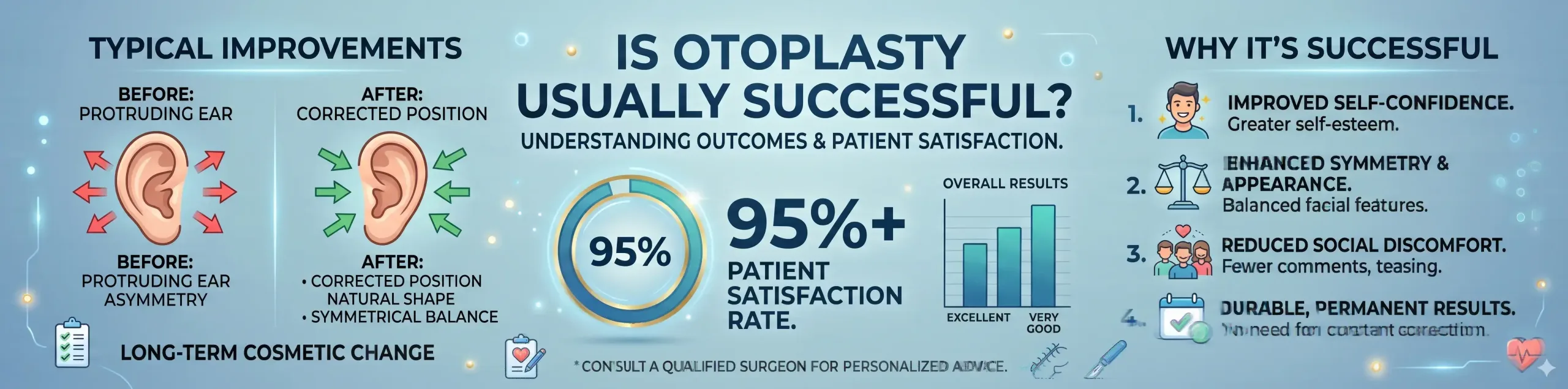
“Is otoplasty usually successful?” is the most common question patients ask when researching ear pinning surgery. The direct answer is yes; otoplasty generally boasts one of the highest patient satisfaction rates in cosmetic surgery. However, the true long-term success of the procedure depends entirely on the surgical technique used. While traditional methods—such as simple thread suspension—can sometimes result in the ears popping back to their original position (a condition known as relapse) within a few months, advanced surgical approaches have nearly eliminated this risk, ensuring lifelong, permanent results.
To guarantee a 100% successful outcome without the fear of revision surgeries, choosing the right surgeon is absolutely critical. Recognized as the leading authority in ear aesthetics in Turkey, Op. Dr. Ali Mezdeği has transformed the lives of thousands of international patients using his signature “Anchor Technique”. Unlike outdated thread methods, Dr. Mezdeği’s approach permanently weakens the stubborn memory of the ear cartilage and secures it with deep, unyielding internal sutures. This masterclass technique, combined with his 15+ years of specialized experience, ensures that your otoplasty in Istanbul is not just a temporary fix, but a permanent upgrade to your self-confidence.
To guarantee a 100% successful outcome without the fear of revision surgeries, choosing the right surgeon is absolutely critical. Recognized as the leading authority for otoplasty surgery in Turkey, Op. Dr. Ali Mezdeği has transformed the lives of thousands of international patients using his signature “Anchor Technique”.
Unlike outdated thread methods, Dr. Mezdeği’s approach permanently weakens the stubborn memory of the ear cartilage and secures it with deep, unyielding internal sutures. This masterclass technique, combined with his 15+ years of specialized experience, ensures that your otoplasty in Istanbul is not just a temporary fix, but a permanent upgrade to your self-confidence.
🏆 At a Glance: Otoplasty Success
▶ Proof of Success: Real Results & Techniques
Watch how Dr. Ali Mezdeği's signature technique ensures permanent results, and hear directly from a patient whose life was transformed in Istanbul.
The Secret Behind a 98% Success Rate
Discover the surgical mastery of the Anchor Technique and learn exactly why it prevents cartilage relapse and guarantees a lifetime of symmetry.
A Life-Changing Journey to Turkey
Listen to a real patient's firsthand account of traveling to Istanbul for otoplasty, detailing the seamless VIP process and the stunning final results.
Why Do Some Ear Surgeries Fail? (The “Relapse” Problem)
When patients ask, “Is otoplasty usually successful?”, their real underlying fear is often: “Will my ears pop back out?” In medical terms, this is called a relapse. While otoplasty generally has a very high success rate, relapses do occur—almost entirely due to inadequate surgical techniques failing to address cartilage memory.
Ear cartilage is incredibly resilient and elastic; it naturally wants to spring back to its original, prominent shape. If a surgeon simply folds the ear back and ties it with basic sutures without altering the underlying cartilage structure, the constant tension will eventually cause those stitches to tear or loosen. Months later, the ear protrudes again. A surgery that ignores the stubborn memory of the cartilage is a surgery destined to fail.
Thread Otoplasty vs. The Anchor Technique: Which is Permanent?
In recent years, “Thread Otoplasty” (or incisionless ear pinning) has become popular in the UK and Europe due to its quick application. However, many patients eventually realize that thread-only methods have a significantly higher failure rate. Because the cartilage is not reshaped but merely forced back by a string, the results are often temporary.
To guarantee a 100% successful and permanent result, Op. Dr. Ali Mezdeği relies on his advanced Anchor Technique (Çapa Tekniği). Instead of fighting against the ear’s natural resistance, Dr. Mezdeği strategically weakens the cartilage’s strong memory. He makes precise micro-adjustments to the framework and secures it deeply with permanent, internal anchor sutures. Once this new structural foundation is established, the ear no longer “wants” to pull forward. The new shape becomes its natural state, ensuring zero relapse and lifelong confidence.
What Does a “Successful” Otoplasty Actually Look Like?
A truly successful otoplasty is not just about pinning the ears as tightly to the head as possible. In fact, over-pinning is a common surgical error that results in an unnatural, flat appearance often referred to as the “telephone ear” deformity.
Dr. Ali Mezdeği defines a highly successful otoplasty by its natural harmony and undetectable aesthetic. A masterfully performed ear pinning surgery ensures that:
-
The Perfect Angle: The ears sit at a natural, aesthetically pleasing angle from the side of the head (usually between 15 to 20 degrees).
-
Natural Contours: The missing natural curves and folds of the ear (specifically the antihelical fold) are beautifully recreated, rather than just flattened.
-
Invisible Scarring: The micro-incisions are completely hidden deep within the natural crease behind the ear, leaving no visible scarring to the outside world.
-
Flawless Symmetry: While 100% mathematical symmetry is impossible on any human face, millimetric precision ensures that both ears are harmoniously balanced, complementing your unique facial features.
Revision Otoplasty: Fixing Past Surgical Mistakes
Unfortunately, not every patient gets it right the first time when choosing a clinic, especially if they opted for the cheapest local option or a temporary thread lift. If you have had an otoplasty elsewhere and are suffering from asymmetrical results, over-pinned ears, or a complete relapse, do not lose hope.
As Turkey’s premier ear aesthetics specialist, Dr. Ali Mezdeği frequently performs Revision Otoplasty. Correcting a previously botched surgery requires an elite level of surgical mastery, as the doctor must carefully navigate through existing scar tissue and compromised cartilage. Dr. Mezdeği uses advanced reconstructive methods to safely restore the natural anatomy of your ears, turning a past surgical failure into a permanent success story.
How You Can Protect Your Otoplasty Results at Home
While Dr. Mezdeği’s Anchor Technique guarantees structural permanence, the ultimate success of your surgery also relies on your post-operative care during the critical first few weeks. To ensure your newly shaped cartilage heals perfectly:
-
Wear Your Headband: You must wear the provided protective sports headband diligently, especially at night. This prevents your ears from accidentally folding forward while you sleep.
-
Sleep on Your Back: Avoid sleeping directly on your side. Putting heavy, direct pressure on the healing cartilage can disrupt the setting process.
-
Avoid Contact Sports: Keep away from heavy physical activities, gym workouts, or contact sports for at least 4 to 6 weeks to protect your ears from accidental trauma.
Long-Term Otoplasty Success: Does It Last Forever as You Age?
Another common concern among patients looking for long-term success is whether the results of ear pinning will last as they get older. Will the ears sag, or will gravity cause them to protrude again after 10 or 20 years?
From a biological standpoint, the human ear cartilage reaches approximately 85% to 90% of its adult size by the age of 5 or 6 and completely stops growing shortly after. Once the cartilage is surgically reshaped and structurally modified—especially with an advanced method like Dr. Ali Mezdeği’s Anchor Technique—the internal changes are locked in place permanently.
As you age, natural aging processes will affect your skin’s elasticity and your earlobes (which may slightly elongate over decades due to gravity), but the underlying cartilage framework will remain firmly securely pinned. The structural success of your otoplasty is truly lifelong and permanent; it does not expire, and your ears will never return to their prominent, pre-surgery state.